Fair Play at the Olympics
Can a loser at the Olympic games win a medal?
At every Olympic Games, World and National Championship there are medals to be won. But there is one particular award which even a loser can be awarded. It is the Pierre de Coubertin International Fair Play Trophy.
As its name suggests, it is given in recognition of acts of great kindness and generosity of spirit.
Here are some stirring and heart-warming true stories of sportsmanship from past Olympic Games and World Championships. They beautifully illustrate the attitude that the Bible speaks of as being God’s instruction to us all.
He has told you, “O man, what is good;
– Micah 6:8 (The Amplified Version)
And what does the Lord require of you
Except to be just, and to love [and to diligently practice] kindness (compassion),
And to walk humbly with your God setting?
Ducklings in danger
One account tells of Henry Pearce of Australia, who was competing in the single scull rowing event at the 1928 Olympics in Amsterdam.

He was leading, when a duck and her string of ducklings came into view up ahead. They were on a collision course and Pearce reckoned that his scull would cut the string in two and sink a few ducklings in the process, so he pulled in his oars.
When the ducks passed, Pearce again bent his back to the task.
There’s a happy ending to the story—Pearce won!
Defeat?
Usually, acts of sportsmanship result in defeat.
This happened in 1990 in the marathon tandem kayak racing event at the world championships in Copenhagen.
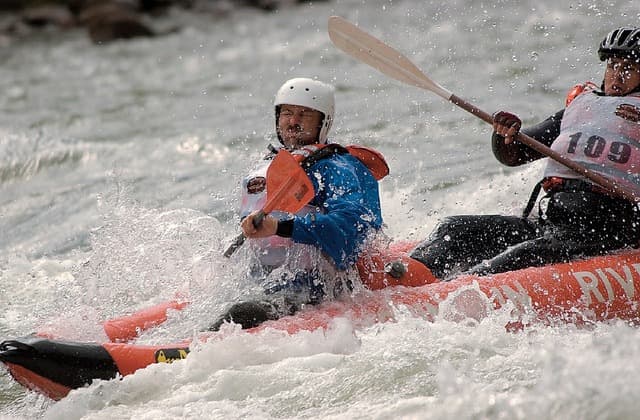
Danish paddlers were leading when their rudder was damaged in a portage (when the kayak is carried overland to the next stretch of water).
British paddlers, who were in second place, stopped to help the Danes fix it. The Danes went on to defeat the British by one second in an event that lasted nearly three hours. But there’s a happy ending to this story too.
The British kayakers won what many people regard as the highest honour in sports. They became the winners of the Pierre de Coubertin International Fair Play Trophy.
The Origins of the Fair Play Trophy
This trophy is named after the founder of the modern Olympic Games, and it has been awarded annually since 1964 to people in sports who have demonstrated nobility of spirit.
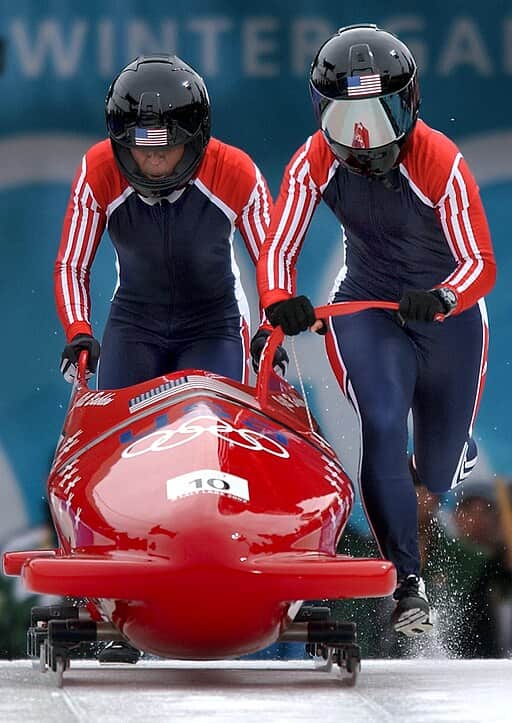
The first trophy went to Eugenio Monti, an Italian bobsleigher, for a gesture that exhibited a touch of class.
In the two-man bobsleigh event at the 1964 Innsbruck Olympics, Monti was leader after his final run. The only one with a chance to beat him was Tony Nash of Great Britain.
As Nash and his teammate got ready for their final run, they discovered that a critical bolt on their sled had snapped at the last moment. Monti was informed of the problem and immediately took the corresponding bolt from his own sled and sent it up to Nash.
Nash fixed his sled, and came hurtling down the course to set a record and win the gold medal.
Other winners
In the past, the trophy has gone, among others, to a Hungarian tennis player who pleaded with officials to give his opponent more time to recover from a cramp and a Chinese wrestler, Gao Feng, who carried his injured opponent off the mat during the Asian Games, even though that opponent had bitten him earlier in the match!
“It’s just human instinct,” the humble wrestler said. “A man gets injured in front of you, so you step up and offer some help. It just happened without any special thoughts in my mind.”
Rodrigo Pessoa of Brazil was awarded the 2010 World Fair Play Diploma for his generous act during the World Equestrian Games.
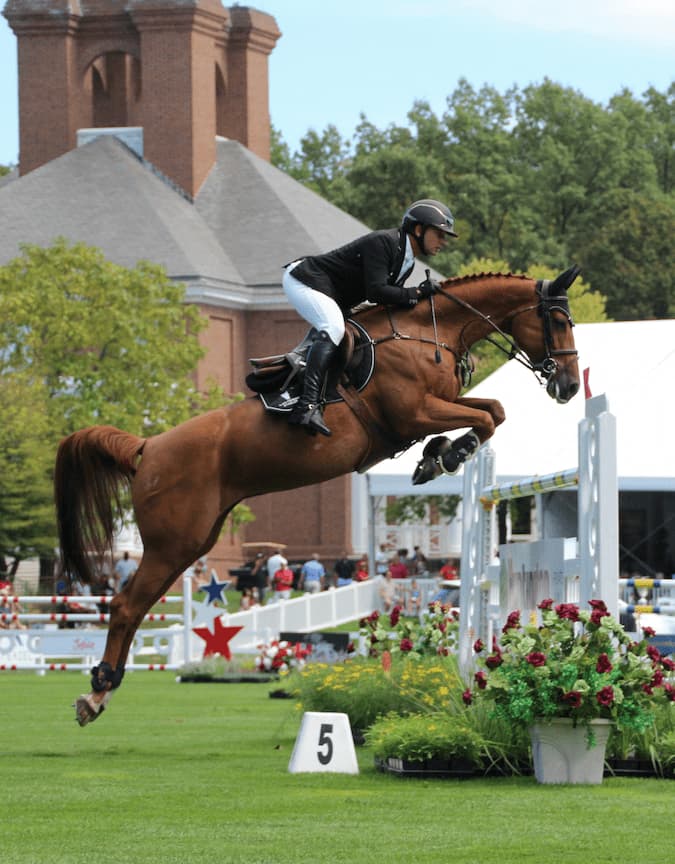
The Brazilian show jumper, (1998 World and 2004 Olympic champion and triple World Cup winner) was one of the final four fighting for the individual gold.
One of the other challengers was the young Saudi rider Abdullah Sharbatly, who had never reached this level before.
In this competition riders exchange horses to test their skill.
As Sharbatly was getting ready to ride Pessoa’s horse, he asked the Brazilian for some guidance. Pessoa explained at length how to ride the horse and advised his opponent on how to tackle the course.
The Saudi rider, benefitting from this advice, won the silver medal, while Pessoa finished fourth missing out on a medal, but winning loud applause from the spectators, and of course the Fair Play Award.
What is good sportsmanship?
“Good sportsmanship may seem hard to define, but its hallmarks include being able to win without gloating, respecting one’s opponents, and being able to lose gracefully.”
StanfordChildrens.org
“Sportsmanship is an understanding of and commitment to fair play, ethical behavior and integrity, and general goodwill toward an opponent.
–Brian G. Phelps, Former Director of Athletics, Fort Worth Country Day
It is an affirmation that an athlete is disciplined enough to have perspective, maintain poise and do what is best for his or her teammates.
Being able to make appropriate behavioral choices at the ‘moment of truth’ and in a pressure situation will often reveal a player’s character and his or her ability to be a good sport. Simply put, sportsmanship is a choice.”
CREDITS:
INFORMATION from Bits & Pieces, October 1992 and Fédération Equestre Internationale (www.fei.org)
PHOTOS:
All photos are licensed with Creative Commons
Mallard Ducks – Picryl.com
Kayakers – Pixabay.com
Bobsleigh and Olympic Rings – Wikimedia.org
Show jumper – By Grace Earley at Pexels.com